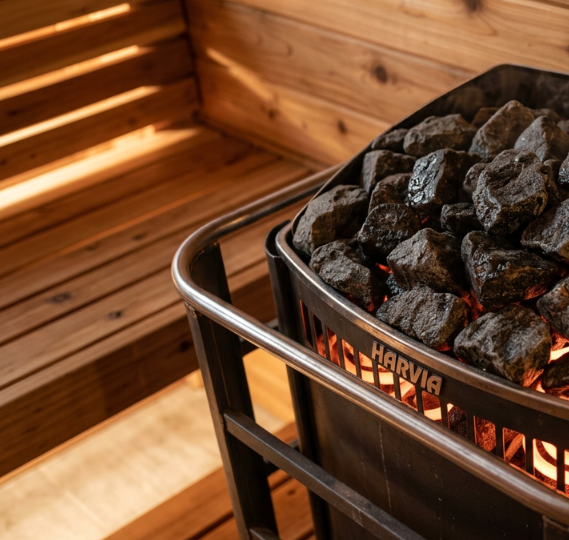
Most electric sauna heaters above 3 kilowatts need a dedicated 240-volt circuit, sized by amperage to the specific heater, while smaller plug-in models under roughly 1.5 to 1.8 kilowatts can run on a standard 120-volt household outlet. The breaker size, wire gauge, and whether a disconnect switch is required all depend on the heater’s rated amperage and local electrical code, which is why this is one part of a sauna install worth confirming with a licensed electrician before ordering rather than after.
What Is the Actual Difference Between 120V and 240V Heaters?
A 120-volt heater plugs into a standard household outlet like a toaster or a lamp, and its power output is capped low, typically 1.5 to 1.8 kilowatts, because that is roughly what a standard 15 or 20 amp household circuit can safely deliver. A 240-volt heater draws from two hot legs instead of one, which roughly doubles the available power for the same amperage and is why larger heaters, generally anything above 3 kilowatts and especially the 6 to 9 kilowatt range common in full-size cabins, are built to run on 240 volts rather than 120.
See also: Epithalon Shopping: Pharmacist or Guy With a Beaker? Let’s Actually Compare
How Do You Know What Amperage a Specific Heater Needs?
Every heater’s spec sheet lists a required amperage alongside its kilowatt rating, and the breaker protecting that circuit needs to be sized to match, not guessed at. A 6 kilowatt 240-volt heater typically needs a 30 amp breaker and a wire gauge sized for that load, commonly 10 gauge copper wire, while a 9 kilowatt unit often steps up to a 40 or 50 amp breaker with correspondingly heavier wire. Undersizing the wire or breaker for the heater’s actual draw is a fire risk, not just an inconvenience, which is why this number should come directly from the heater’s installation manual rather than an assumption based on a different model.
Does the Home’s Electrical Panel Need to Be Checked First?
Yes, and this is the step buyers skip most often. Adding a new 30 to 50 amp circuit requires spare capacity in the panel, both in terms of available breaker slots and total amperage the panel and main service can handle without exceeding safe limits. An older home with a smaller service panel, common in houses built before the 1990s, sometimes needs a panel upgrade before a sauna circuit can be added at all, which is a separate cost that has nothing to do with the heater itself but has everything to do with whether the install is straightforward or turns into a bigger electrical project.
Is a Disconnect Switch Required?
Many local codes require a visible disconnect switch within sight of the heater, particularly for outdoor cabin installs, so the circuit can be shut off directly at the sauna rather than only at the distant panel. This requirement varies by jurisdiction and sometimes by whether the install is indoor or outdoor, which is another reason to have a licensed electrician confirm local requirements rather than relying on what a manual written for a national audience assumes as the default.
How Far Can the Circuit Run From the Panel to the Heater?
Distance matters because voltage drops slightly over longer wire runs, and a run that is too long for the wire gauge originally planned can require stepping up to a heavier gauge to compensate. A heater installed close to the panel, within 50 feet or so, rarely runs into this issue, but an outdoor cabin positioned far from the house, sometimes 100 feet or more away, can turn a straightforward wiring job into a more expensive one simply because of the extra copper and possibly a wider trench needed for the run.
What Electrical Standards Should a Sauna Heater Meet?
A heater built for the U.S. market should carry a recognized safety listing, most commonly from UL, confirming it has been tested for the fire and shock hazards specific to a hot, humid enclosure. Wiring methods and clearances for a wet or high-heat location also fall under guidance published by the NFPA, which local electrical inspectors often reference alongside the National Electrical Code when signing off on a sauna installation. A heater without a visible safety listing on its nameplate is worth treating as a red flag regardless of how reasonable its price looks, since an uncertified heating element in an enclosed wood box is exactly the kind of product these standards exist to catch before it reaches a home.
Why Does Getting the Wiring Right Matter Beyond Just Following Code?
Beyond avoiding a failed inspection, a heater wired to the correct amperage and breaker size runs more predictably, holding the target temperature range that most of the published sauna research is built around. A widely cited review in Mayo Clinic Proceedings summarized cardiovascular associations tied to sauna sessions in the 170 to 190 degree range common in Finnish bathing culture, and a systematic review in Evidence-Based Complementary and Alternative Medicine reported similar findings tied to consistent, reliable heat exposure over repeated sessions. An older review in The American Journal of Medicine covered the same general temperature range while also noting real risks for certain cardiovascular conditions. A heater starved of proper amperage because of undersized wiring struggles to reach or hold these temperatures consistently, which quietly changes the experience compared with what the research actually describes.
What Does This Mean for Total Installation Cost?
Electrical work for a sauna heater commonly runs anywhere from a few hundred dollars for a simple, short run in a home with panel capacity already available, up to several thousand dollars if the panel needs an upgrade or the run is long and requires trenching for an outdoor cabin. Getting a firm quote from a licensed electrician before ordering the heater, rather than after it has already arrived, avoids a sauna sitting boxed in a garage for weeks while the electrical piece gets sorted out. Checking product pages at a dedicated sauna retailer for the exact amperage and breaker size a specific model requires is a useful first step before calling an electrician, since it gives them the numbers needed to quote the job accurately on the first visit.
Frequently Asked Questions
Can a sauna heater run on a regular household outlet? Only small plug-in models under roughly 1.5 to 1.8 kilowatts, which are sized to fit within what a standard 120-volt, 15 or 20 amp household circuit can safely deliver.
What breaker size does a 6 kilowatt sauna heater need? Typically a 30 amp breaker on a 240-volt circuit with 10 gauge copper wire, though the exact requirement should always come from the specific heater’s installation manual.
Does an older home need a panel upgrade for a sauna heater? Sometimes. Homes with a smaller service panel or limited spare capacity may need an upgrade before a new 30 to 50 amp circuit can be added safely, which an electrician can confirm during a panel inspection.
Is a disconnect switch always required near a sauna heater? It depends on local code, though many jurisdictions require one within sight of the heater, especially for outdoor installations. A licensed electrician can confirm the requirement for a specific location.
References
- Cardiovascular and Other Health Benefits of Sauna Bathing: A Review of the Evidence, Mayo Clinic Proceedings, 2018
- Clinical Effects of Regular Dry Sauna Bathing: A Systematic Review, Evidence-Based Complementary and Alternative Medicine, 2018
- Benefits and risks of sauna bathing, The American Journal of Medicine, 2001